
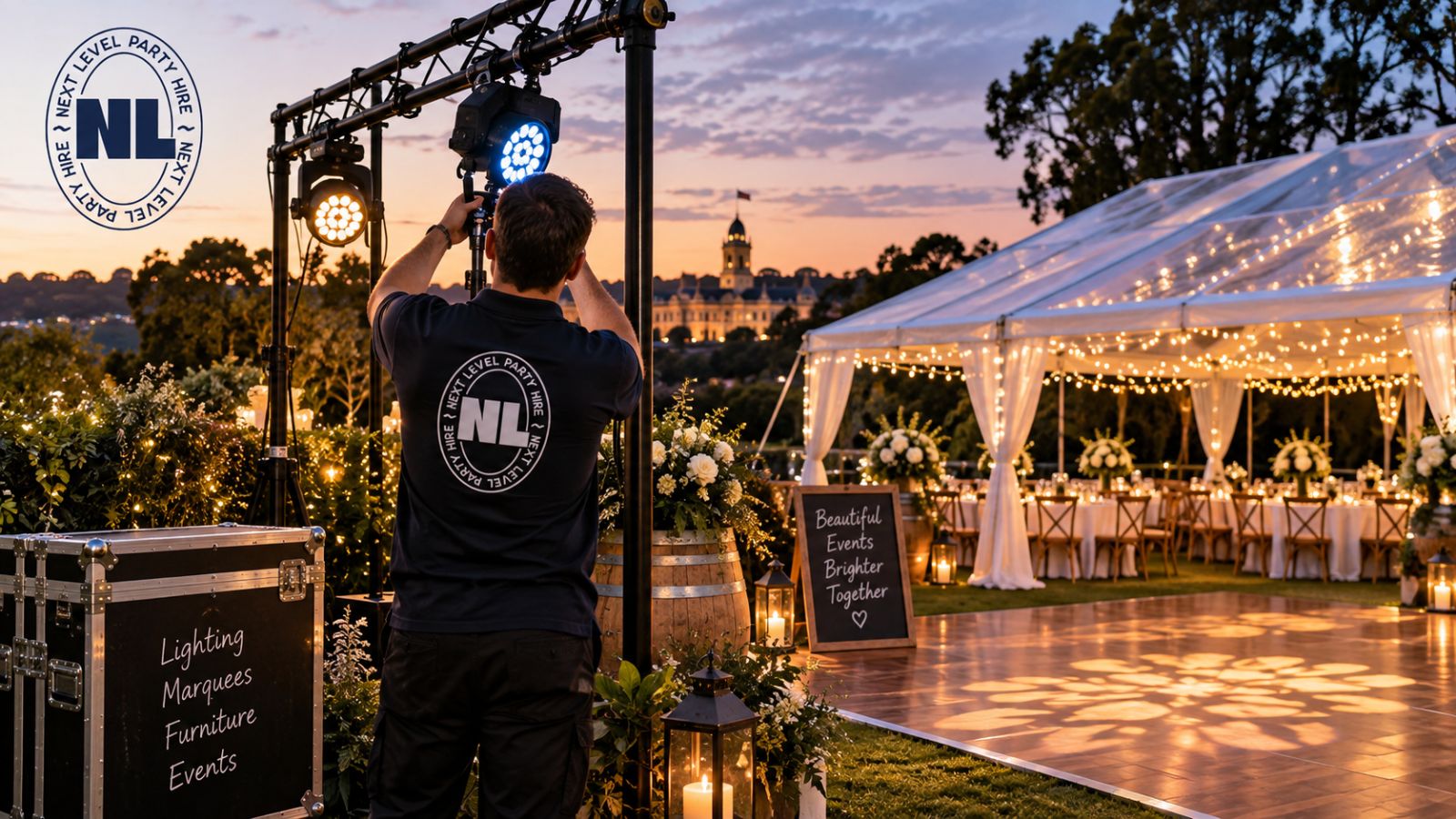
The right lighting can completely change how an event feels. A plain room can become warm and inviting, while an outdoor venue can feel polished and atmospheric after sunset. However, choosing event lighting hire Bendigo options is not simply about picking the brightest lights or the most attractive fixtures. The venue, event type, guest numbers, furniture layout, photography needs and available power all matter. Whether you are organising a wedding, birthday, corporate function or community celebration, thoughtful lighting planning can improve both the appearance and practical comfort of the event.
Lighting is often treated as a finishing touch, but experienced event planners know that it can influence the entire atmosphere of a venue. It affects how guests perceive the space, where their attention naturally moves and how different areas of the event function. Good lighting can highlight a feature without overwhelming the rest of the room.
Consider a reception held inside a large function room. If the overhead lights remain fully illuminated throughout the evening, the space may feel more like a conference venue than a celebration. Soft ambient lighting around dining tables, combined with carefully positioned feature lights, can create a more relaxed environment.
Outdoor events present a different challenge. Once daylight disappears, pathways, dining areas and entertainment spaces need enough illumination for guests to move around comfortably. At the same time, excessive brightness can remove the atmosphere that made the outdoor setting appealing in the first place.
A useful starting point is to divide the venue into functional zones. These might include:
Each zone may need a different lighting approach. The entrance might benefit from welcoming illumination, while the dance floor could require more dynamic lighting. Dining areas generally need enough light for guests to see their food without creating an overly bright environment.
This functional approach is one of the simplest ways to avoid hiring equipment simply because it looks impressive in a catalogue.
Before selecting individual fixtures, consider the physical characteristics of the venue. Ceiling height, wall colour, windows, existing lights and the size of the room can all affect the final result.
A low-ceilinged room, for example, may not need extensive overhead equipment. Wall washing or carefully positioned ambient fixtures could create enough depth without making the ceiling feel crowded. A large warehouse-style venue may require a different combination because the space can absorb light and otherwise appear dark around its edges.
Outdoor venues require even more planning. Trees, marquees, buildings and garden features can become useful visual elements when illuminated correctly. However, equipment must also be positioned safely and protected from weather conditions where necessary.
Do not assume that every venue starts from zero. Many halls, restaurants, wineries, community venues and function centres already have ceiling lights, wall fixtures or other permanent illumination.
Before booking additional equipment, ask the venue manager:
Knowing these details can prevent unnecessary hire costs and reduce setup complications.
The Right Event Lighting Hire approach starts with understanding what the event is actually trying to achieve. A romantic wedding reception needs a different lighting plan from a high-energy birthday party or a corporate awards night.
For a wedding, warm and subtle lighting may work well around dining tables, entrances and floral arrangements. A corporate event may benefit from clean, controlled illumination that keeps speakers and presentation areas visible. A milestone birthday could use more colourful or dynamic lighting around the dance floor.
There is no universal lighting package that works equally well for every event. The same equipment can produce completely different results depending on placement, intensity and the surrounding environment.
Lighting requirements can also change during the evening. An event may begin during daylight and continue several hours after sunset. In that situation, lighting should be planned around the transition rather than only the final evening appearance.
For example, an outdoor wedding may need relatively little artificial lighting during the ceremony. Once dinner begins and daylight fades, table lighting, pathway illumination and decorative features become more important.
Planning for different stages of the event ensures that the lighting remains useful throughout the entire occasion rather than looking perfect for only one hour.
Colour temperature is another important consideration that is often overlooked. Light can appear warm, neutral or cool, and each option creates a different visual impression.
Warm lighting generally creates a softer and more intimate atmosphere. It can work particularly well for weddings, dinners and relaxed evening celebrations. Cooler lighting can provide a cleaner, more contemporary appearance and may be appropriate for certain corporate or modern event themes.
Using several unrelated colours can make a venue look visually confused. This is especially noticeable in photographs, where different light sources can create inconsistent skin tones and strange colour casts.
Instead, choose a simple lighting palette that complements the event styling. If the venue already has strong permanent lighting, take that into account before introducing additional colours.
A professional lighting plan does not necessarily use fewer lights. It uses them more deliberately.
Party lighting has a different purpose from general ambient lighting. It can introduce movement, colour and energy, particularly around a dance floor or entertainment area.
Moving lights, colour-changing fixtures and other dynamic options can be effective for evening celebrations. However, they should be positioned carefully. Lights directed straight into guests’ eyes can become uncomfortable, while excessive movement can make a small room feel visually chaotic.
For a birthday party or engagement celebration, dynamic lighting can be concentrated around the entertainment area while keeping dining and conversation zones calmer. This creates visual contrast and gives guests different environments within the same venue.
Not every part of a party needs dramatic lighting. Guests still need places where they can sit, talk and eat comfortably.
A useful strategy is to create a hierarchy. Let the dance floor or stage become the visual focus while using softer lighting elsewhere. This approach makes the entertainment area stand out without making the entire venue feel like a nightclub.
Wedding lighting hire requires particular attention because lighting becomes part of the visual record of the day. Photographers need enough usable light to capture faces, details and important moments without creating harsh shadows or unnatural colours.
Ceremony spaces, bridal tables, cake tables, speeches and dance floors can all have different requirements. A beautiful decorative light may look excellent to the eye but create problems for photography if it shines directly towards the camera.
One practical step is to discuss the lighting arrangement with the photographer or venue coordinator before the event. Think about where photographs are likely to be taken and whether any lighting equipment could interfere with those angles.
The same applies to video. Bright moving lights or rapidly changing colours may look exciting in person but can create distracting effects in recorded footage.
Good lighting planning considers both the live guest experience and the way the event will appear in photographs and video.
If your event includes live entertainment, speeches, presentations or performances, stage lighting hire may become an important part of the setup.
Stage lighting is not simply about making performers visible. Different fixtures can help separate the stage from the surrounding venue and direct attention towards speakers or performers.
For presentations, even illumination is generally more important than dramatic effects. The audience should be able to see the speaker clearly, while the speaker’s face should remain visible to cameras.
For live music, lighting can be more expressive. Colour, movement and changes in intensity can complement the performance and make the stage feel more dynamic.
The location of microphones, speakers, screens, instruments and performers should be considered before lighting is installed. Poor placement can create shadows or interfere with other equipment.
A basic stage plan can therefore save time during setup. It also allows the hire provider to recommend equipment that suits the actual performance area rather than making assumptions based only on the venue’s size.
For garden celebrations, weddings and evening gatherings, fairy light hire Bendigo options can create a softer decorative effect. Fairy lights can be used around trees, marquees, fences, entryways and selected architectural features.
Their strength is subtlety. Rather than illuminating an entire venue, they can add small points of light that make an outdoor area feel warmer after sunset.
However, placement matters. Wrapping lights around every available tree or surface can quickly become visually overwhelming. Concentrating them around a few important areas often creates a cleaner and more intentional appearance.
Fairy lights should not normally be expected to provide all the illumination guests need. Decorative lighting can make an area attractive, but pathways, steps and functional spaces may require separate practical lighting.
This distinction is particularly important outdoors. Guests should be able to identify changes in ground level and move between areas safely.
Decorative lighting for events works best when it is combined with other types of illumination rather than used alone. A layered lighting plan may include ambient lighting, functional lighting and feature lighting.
Ambient lighting establishes the general brightness of the venue. Functional lighting helps guests use particular areas. Feature lighting draws attention to selected objects or spaces.
For example, an outdoor wedding could use soft ambient lighting around the dining area, practical illumination along pathways and decorative lights around a feature tree. Each layer serves a different purpose.
Think about what you want guests to notice. It could be a floral installation, cake table, stage, architectural wall or entrance.
Lighting that feature can make it more visually important without requiring additional decorations. This is particularly useful when working with a limited styling budget.
One of the most common mistakes is choosing equipment based purely on photographs. A fixture may look impressive in an online image but be unsuitable for the size or layout of your venue.
Another mistake is ignoring power requirements. Multiple fixtures can place demands on electrical circuits, particularly when other catering, audio or entertainment equipment is operating simultaneously.
Poor cable management is another issue. Cables should be planned and secured appropriately so they do not become trip hazards. Equipment should also be installed according to the venue’s requirements and applicable safety considerations.
More light is not automatically better. Excessive brightness can flatten the atmosphere and make decorative features less noticeable.
Instead, ask where light is actually needed. If one area is already bright, adding more equipment there may have little benefit. Directing resources towards darker or visually important areas usually produces a more balanced result.
When comparing suppliers, do not compare prices alone. Ask what is included in the quote and whether delivery, setup, pack-down and collection are included.
Also ask about equipment availability, replacement procedures and what happens if an item develops a fault during the event. A clear agreement can prevent confusion later.
Consider the provider’s understanding of your venue as well. Someone who asks about ceiling height, event timing, power access and floor layout is likely approaching the job differently from someone who simply asks how many lights you want.
To receive a useful quote, have the following information ready:
The more relevant information you provide, the easier it becomes to develop a practical lighting plan.
If your budget is limited, prioritise areas that guests will spend the most time using. Lighting the entire venue equally may not be necessary.
For a wedding, focus on the ceremony, dining area, entrance and dance floor. For a birthday party, the entertainment and dance areas may deserve greater attention. For a corporate event, the stage, presentation area and networking spaces may be more important.
Another useful strategy is to hire versatile fixtures that can serve multiple purposes. Equipment that can be repositioned or adjusted during different parts of an event can provide greater practical value than highly specialised equipment used for only one area.
Before confirming your lighting hire, walk through the event from a guest’s perspective. Imagine arriving at the venue after sunset. Can you see the entrance? Can you find your seat? Are pathways sufficiently visible? Is the bar easy to locate?
Then consider the atmosphere. Is the dining area too bright? Is the dance floor visually separated? Are feature areas highlighted without competing with one another?
Finally, think about photography and safety. Check whether lights will interfere with cameras, whether cables can be managed properly and whether the venue has approved the planned equipment arrangement.
This simple walkthrough can reveal issues that are difficult to spot when looking only at a written equipment list.
Choosing event lighting hire Bendigo for a venue is ultimately about balance. The best setup combines practical visibility with an atmosphere that suits the event, while considering the venue’s existing features, power access, guest movement and photography requirements. Whether you need subtle fairy lights, energetic party lighting, stage illumination or a layered combination, planning around the venue first will generally produce a more cohesive result.
Next Level Party Hire can help event organisers consider suitable lighting options according to their venue, event format and setup requirements. Rather than selecting equipment based solely on appearance, discussing the layout and intended atmosphere can help create a more practical plan.
For local organisers considering event lighting for a wedding, party, corporate function or outdoor celebration, Next Level Party Hire provides an opportunity to discuss the equipment needed for the occasion. A clear brief, realistic budget and venue-specific approach can make the lighting setup easier to plan from the beginning.
Outdoor lighting depends on the venue, season, event timing and layout. Decorative options such as fairy lights can create atmosphere, while practical lighting may be required around entrances, paths, steps and service areas. For larger events, a combination of ambient, decorative and functional lighting usually creates a more balanced result than relying on one type of fixture.
There is no fixed number because venue dimensions, ceiling height, existing lights and the intended atmosphere all influence the requirement. A small room with good existing illumination may need only feature lighting, while a large outdoor area could require several lighting zones. A floor plan and venue assessment are more useful than estimating equipment quantities based solely on guest numbers.
Fairy lights can create an attractive decorative effect, but they may not provide sufficient illumination for every part of an evening wedding. Guests may still need practical lighting around pathways, entrances, dining areas and steps. Fairy lights are therefore often most effective when used as part of a broader lighting arrangement rather than as the sole source of illumination.
Provide the event date, venue, guest numbers, indoor or outdoor location, event type and approximate schedule. It is also useful to share venue dimensions, photographs, existing lighting information and details about stages or entertainment. Explaining the atmosphere you want, such as warm and intimate or energetic and colourful, gives the supplier useful context for recommending suitable equipment.
Start by identifying the areas that genuinely require lighting and separate functional requirements from decorative extras. Use existing venue lighting where appropriate and prioritise guest comfort, important event areas and safety. Compare quotes based on the complete cost, including delivery, setup and collection, rather than choosing solely on the advertised equipment price.