
Planning an outdoor party sounds simple until the weather changes, the ground becomes muddy, or guests arrive to find there is not enough seating. In Castlemaine, a successful outdoor event depends on more than decorations and a good guest list. You need equipment that suits the venue, the season and the type of celebration. Choosing the right party hire Castlemaine options early helps you create a comfortable, practical setup while preparing for unexpected weather without overspending.
Whether you are organising a backyard birthday, an engagement party, a wedding or a community gathering, this guide explains how to choose equipment, plan for changing conditions and avoid common mistakes that can turn an enjoyable occasion into a stressful one.
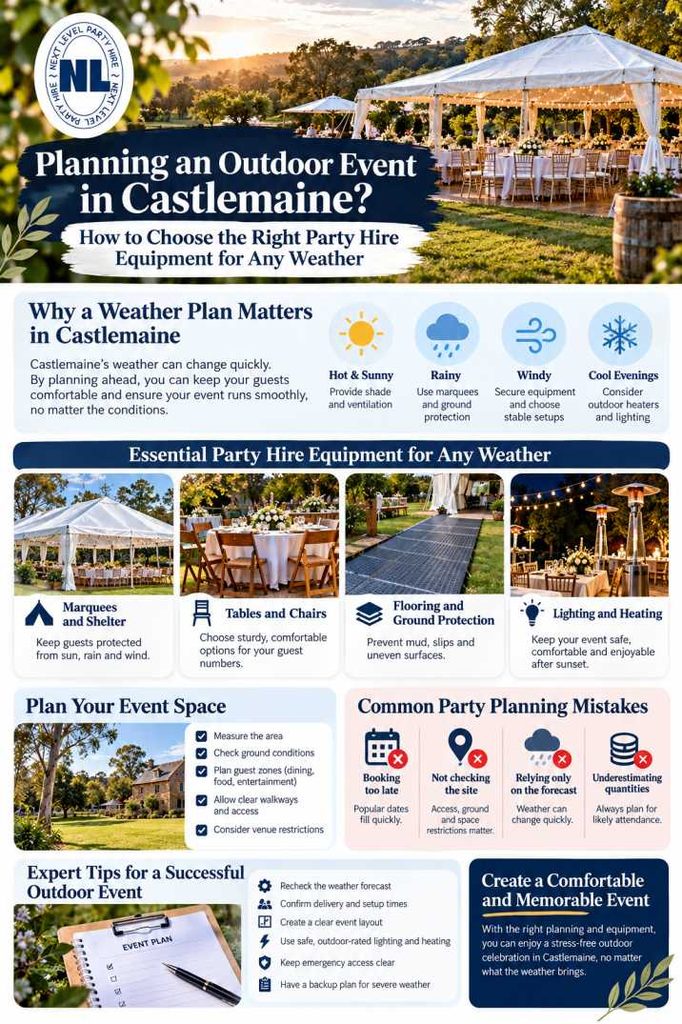
Castlemaine’s weather can vary considerably between seasons, and conditions may change during an event. A sunny afternoon does not guarantee a comfortable evening, particularly when temperatures drop after sunset. Wind can affect marquees, table decorations and lightweight furniture, while rain can make grass slippery and create problems around food stations, electrical equipment and guest walkways.
Before booking anything, consider the event date, expected attendance, venue layout and the hours guests will be outdoors. Check the forecast as your event approaches, but avoid relying on it as your only protection. A practical weather plan includes suitable shelter, secure equipment, appropriate lighting and a clear alternative if conditions become unsafe.
Walk through the event space and identify where guests will sit, eat, socialise and move between activities. Measure the available area, including access paths and any restrictions imposed by the venue. Check whether the ground is level, whether vehicles can reach the setup area and whether trees, fences or buildings affect wind exposure. These details influence which equipment will fit safely and how much usable space remains once everything is installed.
For example, a backyard may appear large enough for a marquee until you account for garden beds, outdoor furniture, access gates and the space required for secure anchoring. Planning the layout first helps you avoid hiring equipment that cannot be positioned properly.
The best equipment depends on what the weather might do and how your guests will use the space. A marquee can provide shelter, but it does not automatically solve problems caused by strong wind, poor drainage or inadequate ventilation. Tables and chairs need stable ground, while catering equipment and lighting must be suitable for the conditions in which they will operate.
When comparing event hire Castlemaine options, think about the entire guest experience rather than individual products. A comfortable seating area, a dry route to the toilets, an accessible food station and adequate lighting can be more valuable than extra decorative pieces.
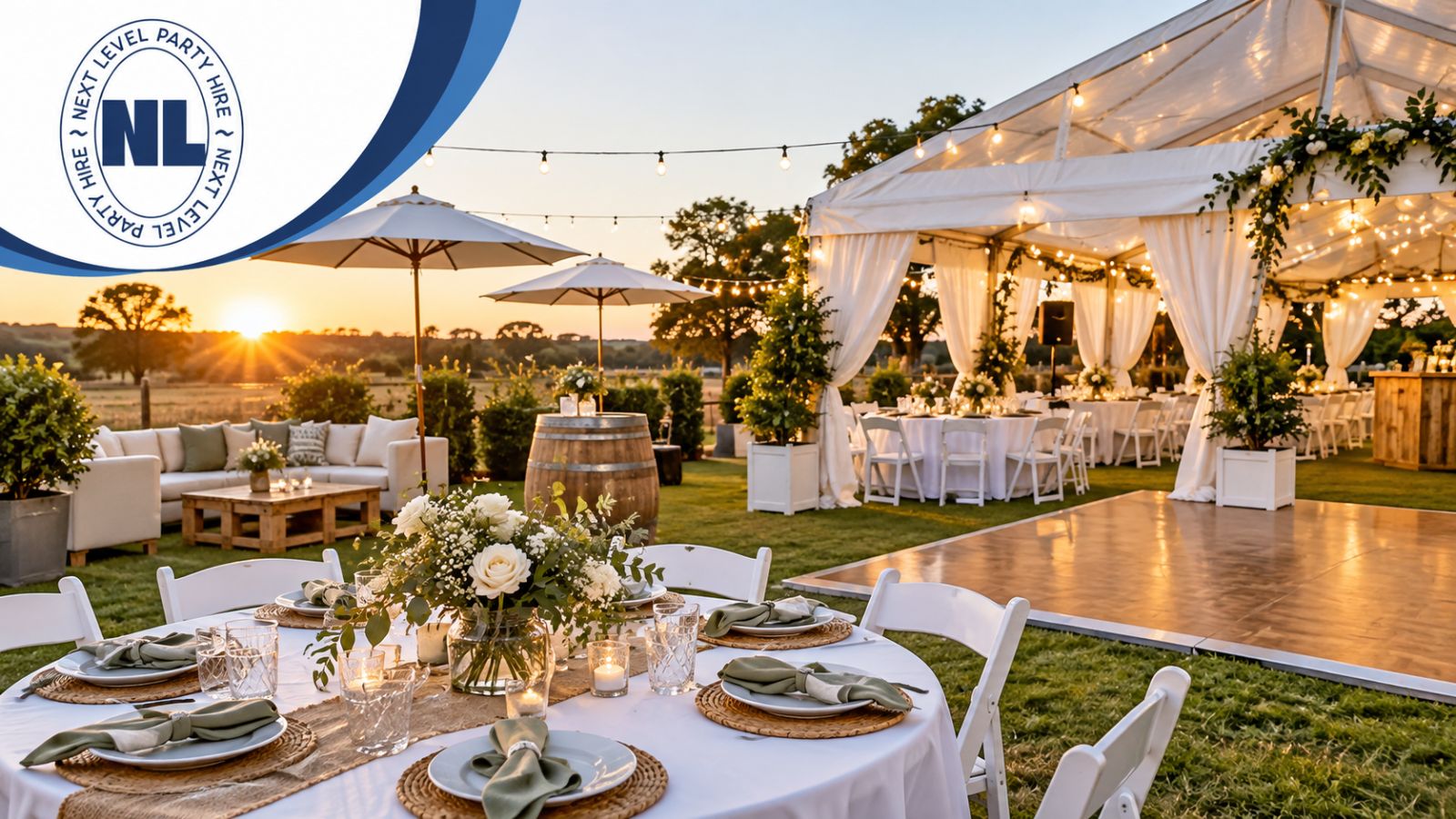
A marquee can create a defined space for dining, speeches or socialising while providing shelter from sunshine and light rain. Choose its size according to the number of guests, seating arrangement and activities planned. A seated dinner generally needs more space per person than a standing cocktail-style gathering because tables, chairs and service access all occupy floor area.
Before booking, ask about sidewalls, anchoring requirements, installation surfaces and weather limitations. A marquee installed on grass may need different anchoring from one positioned on a hard surface. Never assume that adding sidewalls makes a structure safe in strong winds. Follow the hire provider’s operating guidance, and arrange a safe alternative if conditions exceed the equipment’s limits.
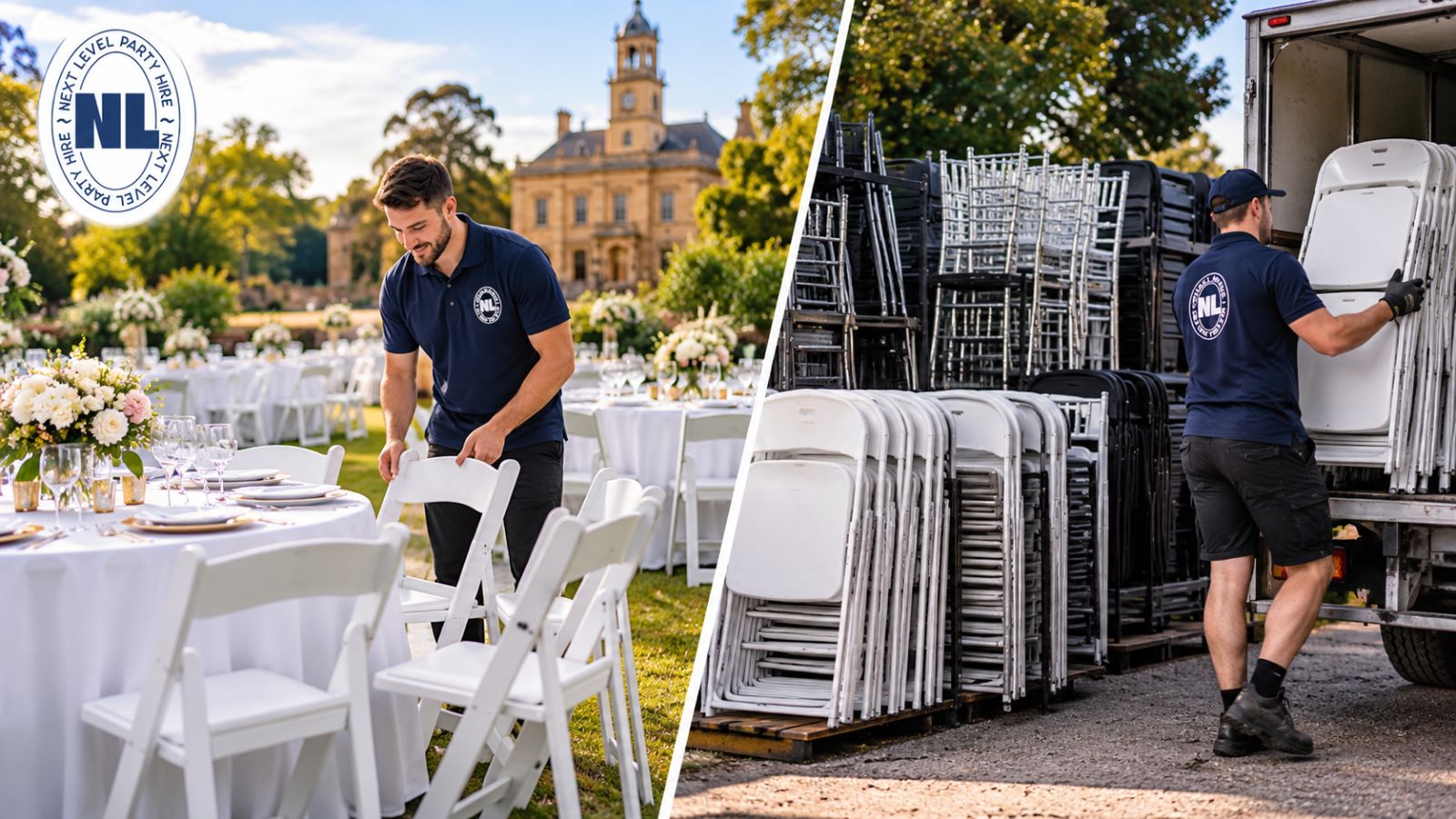
Seating requirements depend on the event format. A birthday lunch may need enough chairs for most guests to sit together, while a casual gathering may work better with a mixture of dining tables, benches and standing areas. Weddings and formal celebrations usually require a more deliberate layout, including space for speeches, gifts, catering staff and movement between tables.
For outdoor events, choose furniture that suits the surface beneath it. Uneven lawns can cause tables to wobble, and narrow pathways can become difficult to navigate when chairs are pulled out. Leave practical walking space, especially around entrances and food stations. If older guests or people with mobility requirements are attending, plan stable seating and accessible routes rather than treating accessibility as a last-minute adjustment.
Ground conditions are easy to overlook when the forecast looks promising. However, rain can soften lawns, create muddy patches and make frequently used routes slippery. This can affect the entrance, catering area, dance floor and places where guests gather around tables.
Ask whether temporary flooring, suitable mats or ground protection are appropriate for your venue. Flooring needs to be stable, fit for its intended purpose and installed without creating raised edges or trip hazards. Avoid laying ordinary rugs over wet grass and assuming they will remain safe. Where the site has poor drainage, consider relocating the event area or using a more suitable surface rather than attempting to cover a persistent water problem.
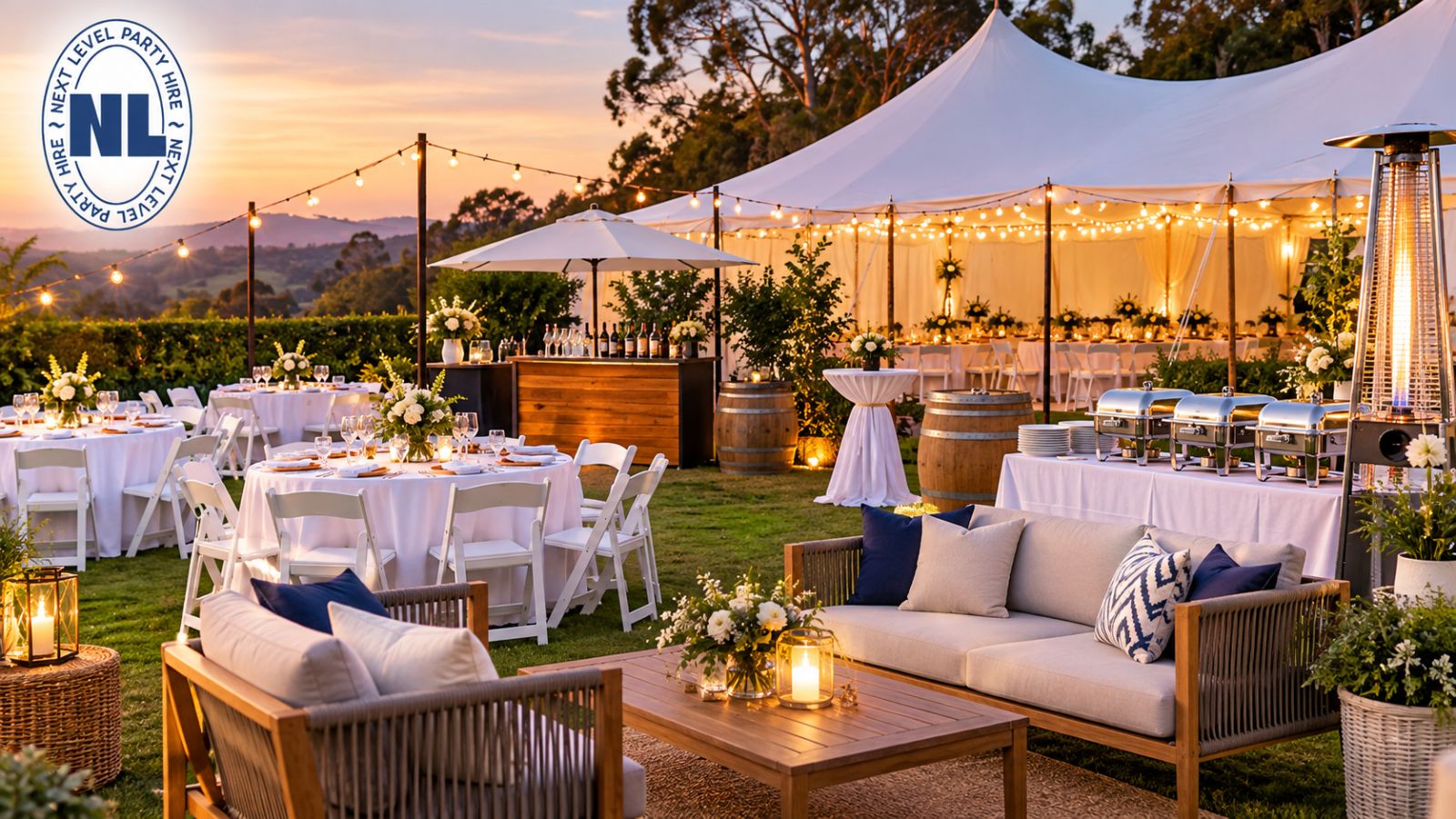
An outdoor event that begins in warm afternoon sunshine may become chilly after sunset. Depending on the season and venue, suitable outdoor-rated heaters can improve comfort, provided they are installed and operated according to the manufacturer’s instructions. Keep heaters away from combustible materials and ensure adequate ventilation where required. Never use outdoor combustion heaters inside an enclosed marquee unless the equipment is specifically approved for that use and all safety requirements are met.
Lighting also deserves attention. Festoon lights can create atmosphere, while functional lighting helps guests navigate steps, pathways and food areas safely. Check that electrical equipment, connections and leads are suitable for outdoor conditions and protected from moisture. Arrange installation through a qualified professional where required, and keep cables away from walkways.
A useful way to plan outdoor event equipment hire Castlemaine requirements is to divide your venue into functional zones. Each zone should have a clear purpose, suitable equipment and a weather response. This method works for small backyard celebrations as well as larger gatherings because it helps you identify missing items before the final booking.
Consider these four zones:
The zones do not need to be separated by barriers. Their purpose is to make the layout easier to manage and prevent activities from competing for the same space. For example, positioning a buffet beside a narrow entrance can create congestion, particularly when guests are carrying plates. Moving it to a more accessible location may improve the event without requiring additional equipment.
Avoid estimating equipment quantities based only on the invitation list. Consider likely attendance, the event duration and whether guests will arrive and leave at different times. A seated meal requires a different arrangement from an informal afternoon gathering, while children may need a separate activity area that does not obstruct serving stations or walkways.
Create a basic layout with approximate measurements before confirming your order. Include tables, chairs, the marquee footprint, catering equipment and access routes. Ask the hire provider to review the plan if you are unsure whether everything will fit. It is usually easier to adjust quantities and positioning before delivery than to reorganise a crowded site on the event day.
Some of the most frustrating event problems are not caused by bad weather itself, but by decisions made before the event. Party Planning Mistakes often involve underestimating the space required, booking equipment too late, overlooking access restrictions or assuming that a backup plan will be unnecessary. These problems can affect budgets and guest comfort even when the weather is perfect.
A marquee, furniture package or dance floor may look ideal in a catalogue but prove unsuitable for the actual venue. Sloping ground, underground services, narrow access gates and low tree branches can limit where equipment may be installed. Before booking, confirm site dimensions and disclose any access restrictions to the hire provider. If the event is at a public reserve or hired venue, check the relevant permission requirements as well. This prevents avoidable changes and helps ensure the equipment can be installed safely.
Checking the forecast is important, but a forecast is not a substitute for preparation. Rain may arrive earlier than expected, temperatures can fall after sunset, and gusty conditions can make temporary structures unsafe. Decide in advance who will monitor the forecast, who will contact the equipment provider and what will happen if the original setup is no longer suitable. If the provider advises that a marquee or other structure cannot safely remain in use, follow that advice rather than trying to secure it with improvised weights or ropes.
Event organisers often concentrate on the party start time and overlook the work required beforehand. Furniture must be positioned, serving areas prepared, decorations installed and walkways checked before guests arrive. Ask for the delivery window, installation arrangements and collection requirements when booking. Also establish whether someone needs to be present to provide access. A clear schedule leaves time to correct layout issues without rushing, while confirming collection details helps prevent confusion after the celebration ends.
The cheapest hire package is not always the most economical choice. A low initial price may exclude delivery, installation, additional accessories or collection outside standard hours. Other providers may include more of these services in a package, so comparing headline prices alone can be misleading.
Start by separating essential items from optional extras. Shelter, sufficient seating, suitable tables, safe lighting and weather-appropriate ground arrangements may be priorities for one event, while decorative features can be reduced if the budget is tight. Request an itemised quote and ask about cancellation terms, damage responsibilities and what happens if severe weather affects installation.
A practical budget should also include a contingency for unexpected expenses. The amount will depend on the event size and the risks involved, but setting aside some funds is more sensible than spending the entire budget on the initial equipment order. If you need to reduce costs, simplify the decorations or reuse suitable furniture before cutting essentials that affect safety and guest comfort.
Experienced event planning begins with thinking about what guests will actually experience throughout the day. Someone arriving in formal shoes may struggle across wet grass, guests serving themselves need room to move, and people staying into the evening may appreciate warmer seating areas. These practical details are easy to miss when attention is focused entirely on the visual design.
Use this checklist as your event date approaches:
Most importantly, establish a clear point of contact for the event. If the weather deteriorates or equipment needs adjustment, someone should know whom to call and what action is authorised. Avoid making improvised changes to marquees, electrical installations or heating equipment. A simple, agreed plan is more useful than a complicated backup that nobody knows how to implement.
A reliable hire provider should help you understand which equipment suits your venue, how much space it requires and what preparations are needed before delivery. When comparing providers, ask about equipment condition, installation responsibilities, weather restrictions, delivery charges and cancellation policies. If you are organising a larger event, clarify who is responsible for checking the setup and whom to contact if conditions change. Clear answers at the booking stage make it easier to manage expectations and avoid misunderstandings later.
For local event organisers, Next Level Party Hire is an option to consider when researching equipment for birthdays, weddings and outdoor celebrations in Castlemaine. Discuss your guest numbers, venue conditions and preferred layout before confirming your booking, and ask which items are available for your date.
Ultimately, successful outdoor events depend on preparation rather than perfect weather. By planning the layout, choosing suitable equipment and agreeing on a realistic backup plan, you can make your celebration more comfortable and manageable. Next Level Party Hire may be worth contacting to discuss your requirements and available hire options. Whatever provider you choose, prioritise safety, clear communication and equipment that suits the actual conditions at your venue.
The equipment depends on your guest numbers, venue and event format. Most gatherings need suitable tables and chairs, while events exposed to sunshine or rain may also require a marquee or other appropriate shelter. Evening celebrations can benefit from suitable lighting and, during cooler weather, correctly installed outdoor heating. Before booking, measure the site and consider catering, entertainment, access routes and ground conditions so the equipment fits the space without obstructing movement.
Booking several weeks or months ahead is sensible for larger events, weddings and celebrations scheduled during popular periods. The ideal lead time depends on the date, equipment quantities and provider availability. Marquees, large furniture orders and specialised items may require additional planning. Once you know your venue and approximate guest numbers, request quotes and confirm availability. For smaller or last-minute events, ask what is available rather than assuming a complete equipment package can be supplied at short notice.
Follow the weather plan agreed with your venue and hire provider. If conditions remain suitable, an appropriately installed marquee or sheltered area may help guests stay comfortable. However, heavy rain can create drainage problems, while strong winds can make temporary structures unsafe. Do not modify anchoring or add improvised weights without professional guidance. If conditions exceed the equipment’s safety limits, follow the provider’s instructions and use your alternative indoor venue or rescheduling arrangement where available.
Consider the time of day, likely evening temperatures and the needs of your guests. Suitable shelter, warm seating areas and appropriately rated outdoor heaters can help, provided all equipment is installed and operated safely. Lighting should make entrances and pathways easy to navigate after dark. Keep heaters away from combustible materials, maintain the ventilation required by the equipment and avoid using outdoor heaters in enclosed spaces unless specifically approved for that application. Informing guests about outdoor conditions can also help them dress appropriately.
Begin with the equipment that supports safety, comfort and the event’s essential activities. Accurate guest numbers help prevent unnecessary furniture orders, while a measured layout reduces the risk of hiring items that do not fit. Compare itemised quotes, including delivery, installation and collection, rather than choosing solely on the advertised price. You can often save by simplifying decorations, using suitable furniture you already own and avoiding unnecessary layout changes. Do not reduce essential shelter, safe access or suitable equipment simply to meet a lower budget.