
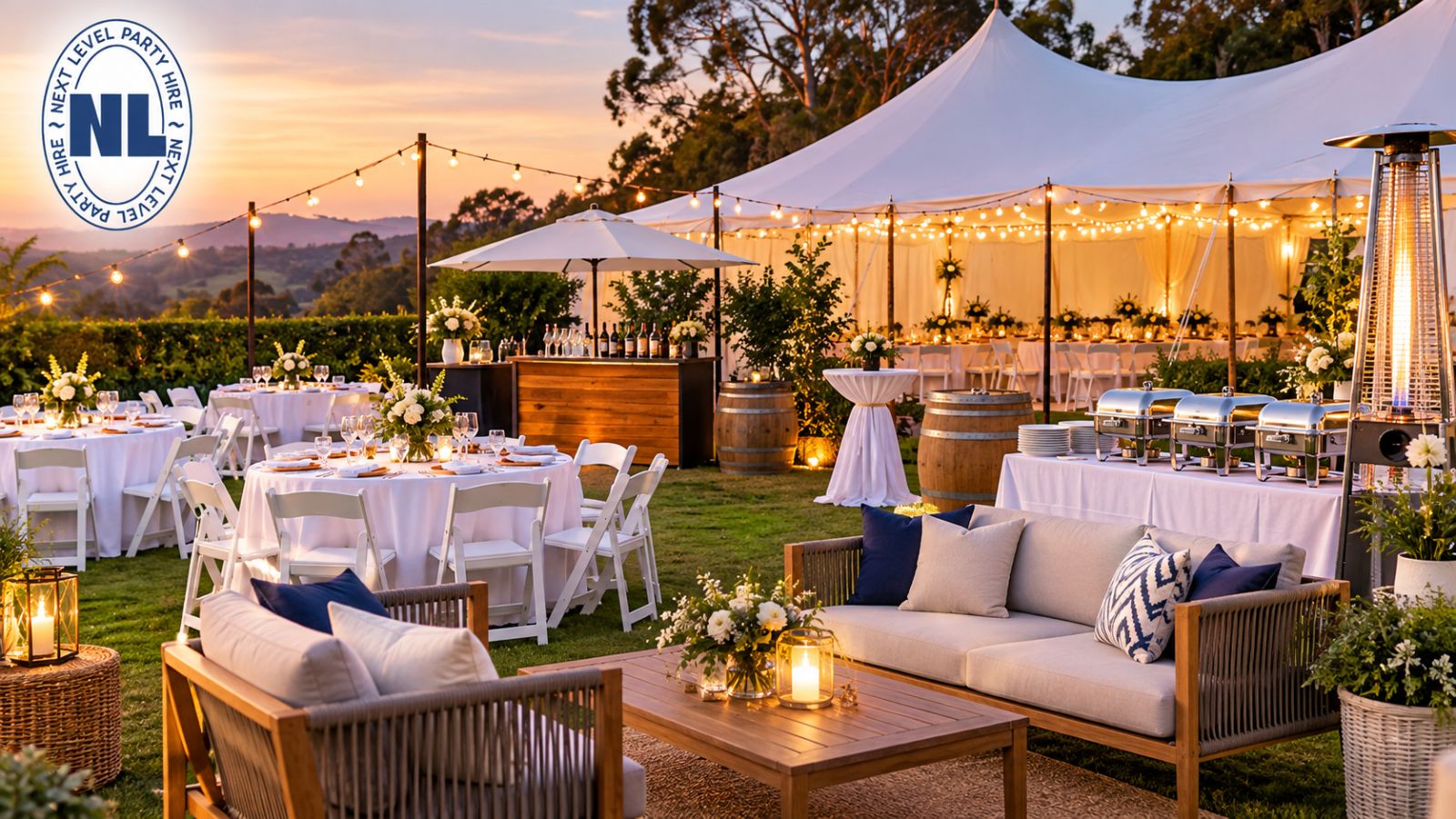
Planning a party sounds simple until you start working out everything guests will actually need.
Tables, chairs, shade, lighting, food-service equipment, decorations, rubbish bins and weather protection can quickly turn a small gathering into a surprisingly complicated setup. Hiring too much equipment wastes money and space, while hiring too little can leave guests standing around, sitting on the grass or searching for somewhere to put their food.
That is why choosing party hire Woodend equipment should begin with the event itself rather than with a catalogue of products.
How many people are coming? Is the event indoors or outdoors? Will guests sit down for a meal or mostly stand and mingle? What time will it finish? Is there enough shade? What happens if the weather changes?
This guide explains what party equipment is genuinely useful, how much you may need, and how to build a practical setup without hiring items simply because they look good.
The right equipment depends on the type of event, but most parties can be planned around a few basic categories:
Not every event requires everything on this list.
A two-hour birthday gathering in a backyard will have very different requirements from a wedding reception or large family celebration.
The best approach is to start with the guest experience.
Ask yourself what guests will need from the moment they arrive until they leave.
Guest numbers influence almost every other equipment decision.
A common mistake is to estimate quantities based on the number of invitations rather than the number of people who are realistically expected to attend.
For example, if 60 people are invited but you expect approximately 45 guests, planning every item for 60 may create unnecessary costs and take up additional space.
However, this does not mean you should automatically hire exactly 45 chairs.
The style of the event matters.
A formal sit-down meal requires substantially more seating than a casual cocktail-style gathering where people move between tables, food stations and outdoor areas.
Think about who is attending.
An event with older relatives may require more comfortable seating than a casual gathering for young adults.
Children may need smaller tables or dedicated activity areas.
A family event may benefit from having additional seating distributed around the venue rather than placing every chair around one large dining table.
Planning around your guests makes the equipment list much more practical.
Tables and chairs are usually the first pieces of equipment to consider because they affect how the rest of the venue is arranged.
The appropriate table style depends on:
Long tables can create a communal dining atmosphere and make efficient use of narrow spaces.
Round tables can encourage conversation between guests and work well for more traditional dining arrangements.
Smaller cocktail or bar-height tables are useful when the event is designed around standing and mingling.
One of the easiest mistakes is counting only guest dining tables.
You may also need separate surfaces for:
Without these dedicated areas, food and drinks can end up taking over dining tables.
When planning outdoor furniture hire Woodend, think beyond simply providing enough chairs.
Outdoor furniture needs to work with the environment.
Consider where the furniture will be positioned in relation to:
For example, placing every chair in direct afternoon sun may technically provide enough seating but still create an uncomfortable experience.
A better layout might combine dining tables under shade with additional lounge-style seating in another part of the outdoor area.
Do not fill every available square metre with tables and chairs.
Guests need room to move.
Catering staff may also need clear paths between the kitchen, serving area and dining space.
As a practical exercise, walk through the proposed layout before the event.
Imagine carrying plates from the food area to the tables.
Imagine two guests trying to pass each other.
Imagine someone pulling a chair out.
If the layout feels difficult before the party begins, it is unlikely to become easier once the venue is full.
A marquee can provide valuable weather protection for outdoor events, but it should not automatically be included in every equipment list.
Consider hiring one when:
A marquee can also help define the event area.
However, its size should be based on how the space will actually be used.
A marquee containing only chairs requires a different footprint from one containing dining tables, a buffet, a dance floor and entertainment equipment.
Before arranging a marquee, consider the installation area.
Check:
The exact installation requirements depend on the marquee system and venue.
For larger events, it is sensible to discuss site conditions with the hire provider before booking.
Lighting is often treated as decoration when it should first be treated as a practical requirement.
If guests are expected to remain outdoors after sunset, they need enough illumination to move safely between important areas.
When considering lighting hire Woodend, think about several different lighting zones.
Guests should be able to see where they are walking.
Tables should have enough light for guests to see their food and belongings comfortably.
The entrance should remain clearly visible, particularly if guests arrive after dark.
Guests need to see what is being served.
Once practical lighting is covered, decorative lights can create atmosphere.
Fairy lights, festoon lighting and other decorative options can add warmth to an outdoor event, but they should complement rather than replace adequate functional lighting.
The phrase party equipment hire Woodend covers a broad range of equipment, so it helps to divide the list according to what each item actually does.
Depending on the event:
You may need:
Depending on the venue:
Potential options include:
Depending on the catering arrangement:
These might include:
The important point is that an equipment list should follow the event plan rather than the other way around.
A birthday party may be relatively simple, but the requirements change significantly depending on age and format.
Consider:
You may want to keep food and fragile decorations away from high-activity areas.
An adult celebration may require:
The key is to match the equipment to the way guests will spend their time.
Weddings generally require more detailed coordination because different areas need to work together.
You may need separate zones for:
A common planning mistake is concentrating so much on the dining area that there is insufficient space for everything else.
Before finalising equipment quantities, sketch the entire venue.
Even a basic hand-drawn floor plan can reveal potential problems.
Corporate functions and community events often need flexible layouts.
For example, a business gathering might begin with guests standing and networking before moving into a presentation or meal.
That means the furniture may need to support several different activities.
Consider:
The equipment should make movement between these areas intuitive.
Outdoor events always involve some degree of weather planning.
Even when the forecast looks favourable, conditions can change.
For an outdoor party, think about:
Guests may need shade during the afternoon.
Lightweight decorations and unsecured furniture can become problematic in strong wind.
A covered area may protect guests, furniture and catering equipment.
Evening events may require additional warmth.
In warmer conditions, shade, airflow and access to drinking water become particularly important.
The correct response depends on the venue and weather conditions. Safety should take priority over keeping an outdoor setup unchanged when conditions deteriorate.
Sixty guests does not automatically mean you need sixty identical chairs and a particular number of tables.
Event format matters.
Large equipment needs to get into the venue.
Check gates, driveways, stairs, narrow paths and other access points before booking.
Equipment does not magically appear in its final position.
There needs to be enough room for delivery, installation and pack-down.
Decorations are attractive, but excessive furniture and props can make a venue difficult to navigate.
Outdoor events should have a realistic plan for changing conditions.
A table may look suitable in a catalogue but be too large for the available space.
Always consider actual dimensions.
Before confirming your hire list, work through this checklist.
This checklist can then be adjusted according to the event.
Draw a rough floor plan and place tables, chairs and major equipment on it.
This is one of the easiest ways to identify overcrowding.
Do not allocate every part of the venue to a specific activity.
A small flexible area can be useful when guests naturally gather in one location.
If the buffet is positioned directly beside the entrance, guests may create congestion.
Place food and drinks where people can access them without blocking major walkways.
Equipment needs to be packed away.
Make sure the layout still allows staff or organisers to move equipment out efficiently.
Before booking, check whether delivery, setup, collection, cleaning or other services are included.
Terms vary between providers, so never assume.
Simple gatherings can often be planned independently.
However, larger events can involve dozens of individual decisions, and coordinating furniture, shelter, lighting and other equipment becomes more complicated as guest numbers increase.
This is where an experienced hire provider can be useful.
Next Level Party Hire can be considered when you need help determining which equipment is appropriate for your event, particularly when the venue, guest numbers or weather considerations make planning more involved.
The most useful conversations are usually specific.
Instead of simply asking, “What should I hire?”, provide details such as:
The more information you provide, the easier it is to develop a practical equipment list.
The right party hire Woodend setup is not about hiring the largest collection of equipment. It is about choosing the right equipment for the way your guests will use the space.
Start with guest numbers and event format. Then consider tables, chairs, shade, weather protection, lighting, food-service areas and entertainment requirements. Measure the available space before confirming quantities, and make sure there is enough room for guests and staff to move comfortably.
For outdoor events, outdoor furniture hire Woodend should be planned around comfort, weather exposure and the venue layout. If the celebration continues after dark, practical lighting deserves just as much attention as decorative styling.
Likewise, party equipment hire Woodend works best when each item has a clear purpose. A good hire list should solve genuine event requirements rather than simply adding more furniture or decorations.
For larger or more complicated celebrations, discussing your requirements with Next Level Party Hire can help you work through the practical equipment considerations before the event day.
The best party setup is ultimately the one guests barely have to think about: there is somewhere comfortable to sit, enough room to move, food is easy to access, the lighting works, and everyone can enjoy the event without the equipment getting in the way.
There is no universal quantity because equipment requirements depend on guest numbers, event format, venue and duration. A sit-down dinner requires more seating than a cocktail-style event. Start with a guest list, determine how people will use the space, then calculate furniture and equipment around those activities.
Not necessarily. A marquee is useful when guests need protection from sun or rain, but the decision depends on the venue, season, weather forecast and availability of indoor alternatives. For important outdoor events, having a realistic weather contingency is sensible even when a marquee is not initially planned.
Consider comfort, quantity, surface conditions, weather exposure, available space and how guests will move around the furniture. Outdoor furniture should also suit the event format. Dining chairs and tables serve a different purpose from lounge furniture or cocktail-height tables.
Start with practical lighting for entrances, pathways, dining areas and food stations. Decorative lighting can then be added to create atmosphere. Avoid relying entirely on decorative lights if guests need to move around the venue after dark. Any electrical equipment should be installed and operated safely according to the equipment instructions and applicable requirements.
Provide the expected guest numbers, event type, venue location, indoor or outdoor setup, date, duration, furniture requirements and any known access restrictions. If the event is outdoors, mention the available ground area, shade, weather concerns and whether power is available. This information helps the provider recommend equipment based on the actual event rather than assumptions.